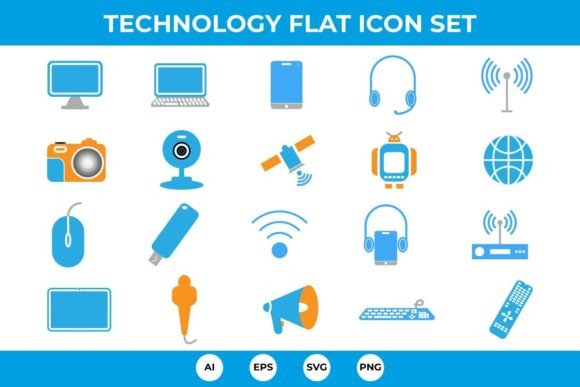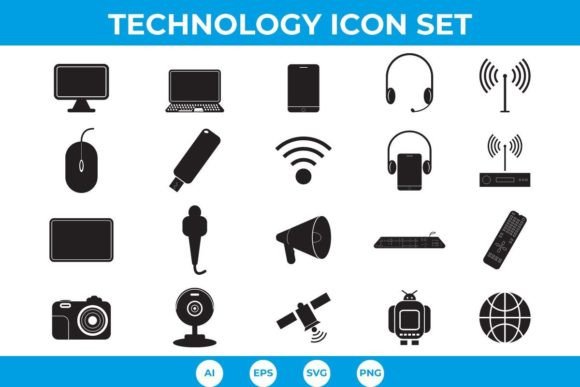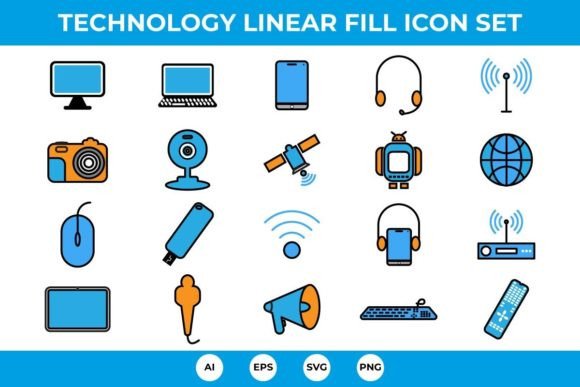
20 Flat Technology and Multimedia Icons: Essential Design Elements for Modern Apps
In the rapidly evolving landscape of digital design, clarity and speed are paramount. Users interact with interfaces in milliseconds, forming immediate impressions based on visual cues. This is where a high-quality collection of flat technology and multimedia icons becomes indispensable. Whether you are developing a mobile application, designing a responsive website, or creating marketing materials for a tech startup, the right visual assets can significantly enhance user experience (UX) and interface aesthetics.
This article explores the value, versatility, and practical application of a curated set of 20 unique flat icons designed specifically for technology and multimedia contexts. We will delve into why flat design remains a dominant trend, how these specific icons serve various functional needs, and what makes this particular vector collection a valuable resource for designers and developers alike.
The Enduring Power of Flat Design in Tech Interfaces
Flat design is not merely a stylistic choice; it is a functional necessity in modern UI/UX design. By stripping away unnecessary three-dimensional effects like gradients, shadows, and textures, flat icons reduce visual clutter. This minimalism allows users to process information faster. When a user sees a settings icon or a power icon, they need to recognize its function instantly, without deciphering complex artistic details.
The 20 Flat Technology and Multimedia Icons discussed here adhere to these principles. They are clean, geometric, and easily recognizable. This style ensures that icons remain legible even at smaller sizes, such as 16px, which is crucial for dense dashboards or mobile navigation bars. Furthermore, flat icons are inherently scalable. Because they rely on simple shapes and lines, they retain their crispness whether displayed on a massive 4K monitor or a small smartwatch screen.
Comprehensive Icon Breakdown and Use Cases
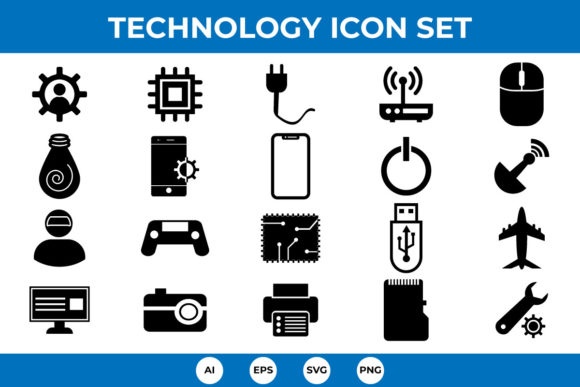
A versatile icon set must cover a broad spectrum of technological functions. This collection includes 20 unique icons, each crafted to represent common hardware, software, and connectivity concepts. Let’s examine how these specific icons can be integrated into real-world projects.
Hardware and Connectivity Symbols
For applications dealing with device management, IoT (Internet of Things), or IT support, clear hardware representation is vital. The collection includes:
- CPU icon: Essential for system monitoring apps, performance dashboards, or computer specification pages.
- Router icon: Perfect for network configuration tools, Wi-Fi setup guides, or internet service provider portals.
- USB icon: Widely used for file transfer indicators, peripheral connection prompts, or charging status displays.
- Memory card icon: Ideal for storage management interfaces, camera apps, or data backup solutions.
- Printer icon: A standard requirement for document handling apps, office suites, and e-commerce checkout flows.
These icons help users navigate complex technical processes by providing familiar visual anchors. For instance, a router icon immediately signals network settings, reducing the cognitive load required to find connectivity options.
User Interaction and Device Control
Mobile and web applications thrive on intuitive user control. The following icons facilitate seamless interaction:
- User settings icon: Critical for profile management, account customization, and privacy controls.
- Phone settings icon: Specifically tailored for mobile OS interfaces or companion apps that manage smartphone configurations.
- Settings icon: The universal symbol for preferences, applicable across virtually all software platforms.
- Power icon: Used for shutdown sequences, battery status indicators, or turning devices on and off remotely.
- Plug icon: Represents connectivity, charging states, or power source selection.
Consistency in these control icons is key. When a user settings icon looks distinct yet harmonious with the phone settings icon, users can differentiate between general account preferences and device-specific configurations without confusion.
Multimedia and Entertainment Assets
The multimedia sector demands dynamic and engaging visuals. This collection caters to gaming, photography, and media consumption:
- Virtual reality gaming icon: A niche but growing category, perfect for VR app stores, gaming platforms, or tech blogs covering immersive experiences.
- Gaming icon: A broader symbol for game libraries, leaderboards, or entertainment sections.
- Camera icon: Fundamental for social media apps, security systems, or photography portfolios.
- Light icon: Often used for toggle switches (dark/light mode), brightness adjustments, or smart home lighting controls.
These icons add a layer of context to content-heavy platforms. A virtual reality gaming icon instantly communicates immersive content, attracting the target audience more effectively than text alone.
Communication and Mobility
In our connected world, communication icons are ubiquitous. This set includes:
- Mobile icon: Represents smartphones, mobile compatibility, or app downloads.
- Satellite icon: Useful for GPS services, location tracking, or global connectivity features.
- Airplane icon: Standard for travel apps, flight modes, or logistics tracking.
- Computer icon: Denotes desktop versions, remote access, or workstation management.
- Mouse icon: Often used in tutorials, peripheral shops, or cursor customization tools.
- Technology icon: A generic yet powerful symbol for tech news, innovation hubs, or general IT services.
Technical Specifications and Versatility
One of the standout features of this 20 Flat Technology and Multimedia icons Vector collection is its technical flexibility. Designers work in various environments, from vector-based illustration tools to raster-based web layouts. To accommodate these diverse workflows, the collection includes five distinct versions for each icon:
- AI (Adobe Illustrator): Available in 64px and 16px sizes. Ideal for designers who need to edit paths, adjust anchor points, or integrate icons into larger vector compositions.
- EPS (Encapsulated PostScript): Available in 64px and 16px sizes. A universal vector format compatible with most design software, ensuring broad accessibility.
- SVG (Scalable Vector Graphics): Available in 64px and 16px sizes. The gold standard for web development. SVGs are code-based, allowing for easy color changes via CSS, animation, and infinite scalability without quality loss.
- PNG (Portable Network Graphics): Available in 64px and 16px sizes. Perfect for quick implementation in apps or websites where vector support is limited. The transparent background ensures seamless integration over any colored interface.
- JPG (Joint Photographic Experts Group): Available in 64px and 16px sizes. Suitable for documents, presentations, or platforms that do not support transparency.
This comprehensive format support means you can easy change color or resize the icons to match your brand identity. For example, if your app uses a dark mode, you can invert the colors of the SVGs instantly. If you need a favicon, the 16px PNG provides a crisp, ready-to-use asset.
Who Benefits from This Icon Collection?
The utility of these high quality icons extends across multiple professional domains:
Web and Mobile Developers: Instead of spending hours designing custom icons or searching for inconsistent free resources, developers can implement these ready to use assets directly. The SVG format allows for lightweight code integration, improving page load speeds.
UI/UX Designers: Designers can use the AI and EPS files to prototype interfaces quickly. The consistent stroke width and style ensure visual harmony across the entire application.
Content Creators and Bloggers: Tech reviewers and bloggers can use the JPG and PNG icons to illustrate articles about hardware, software updates, or gaming trends, making their content more engaging and easier to scan.
Business Owners: For startups launching tech products, having a cohesive set of icons for their website and pitch decks enhances professionalism and brand credibility.
Practical Considerations for Implementation
While flat icons are highly effective, proper implementation is crucial. Here are some best practices:
Consistency is Key: Always use icons from the same set. Mixing different styles (e.g., combining flat icons with outlined or 3D icons) creates visual dissonance and confuses users.
Size Matters: Use the 16px versions for dense interfaces like toolbars or footers. Reserve the 64px versions for feature highlights, onboarding screens, or empty states where the icon serves as a primary visual element.
Accessibility: When using SVGs or PNGs on the web, always include alternative text (alt tags) or ARIA labels. This ensures that users relying on screen readers can understand the function of the user settings icon or power icon.
Color Contrast: Ensure that the icon color contrasts sufficiently with the background. While these icons are easy to recolor, maintaining readability for visually impaired users is a legal and ethical requirement in many jurisdictions.
Conclusion
In conclusion, the 20 Flat Technology and Multimedia Icons represent more than just decorative elements; they are functional tools that enhance communication, improve usability, and elevate the aesthetic quality of digital products. From the CPU icon to the virtual reality gaming icon, each asset is crafted with precision and versatility in mind.
By offering multiple formats (AI, EPS, SVG, PNG, JPG) and sizes (16px and 64px), this collection empowers creators to adapt these visuals to any project requirement. Whether you are building the next big mobile app, designing a corporate intranet, or writing a tech blog, these high quality icons provide a solid foundation for clear and effective visual communication. Embrace the simplicity and efficiency of flat design, and let these icons streamline your creative workflow.